Mountain Biking Far From Immediate Help - Kit
What to Carry When Mountain Biking Far From Immediate Help: My Complete Kit Breakdown
CYCLINGMOUNTAIN BIKINGOUTDOOR INSTRUCTING
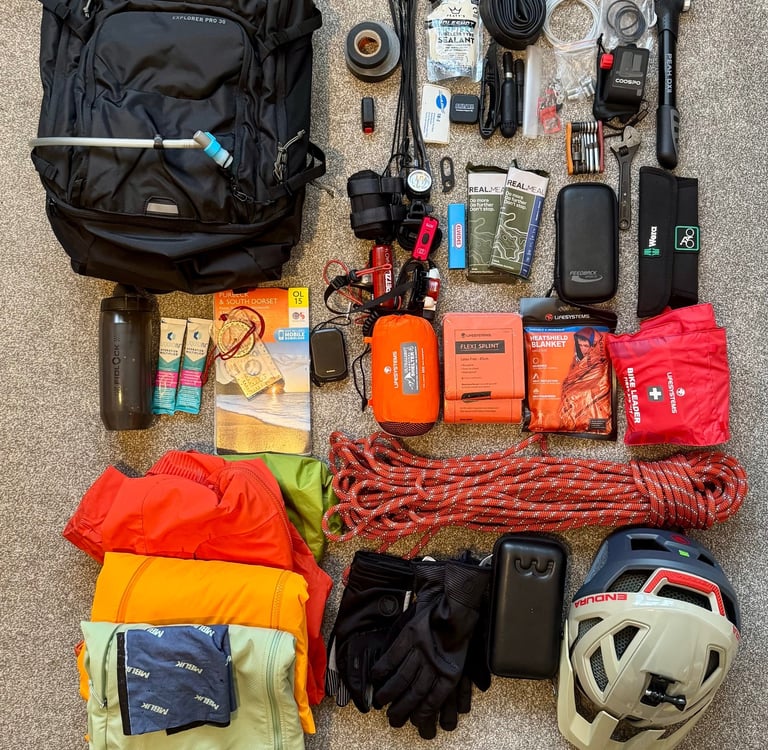
Mountain biking in remote terrain is one of the most rewarding ways to explore the outdoors. The silence, the views, the challenge — it’s why so many of us head for the hills instead of the trail centre. But riding far from civilisation comes with a simple truth: when help is a long way off, what you carry matters.
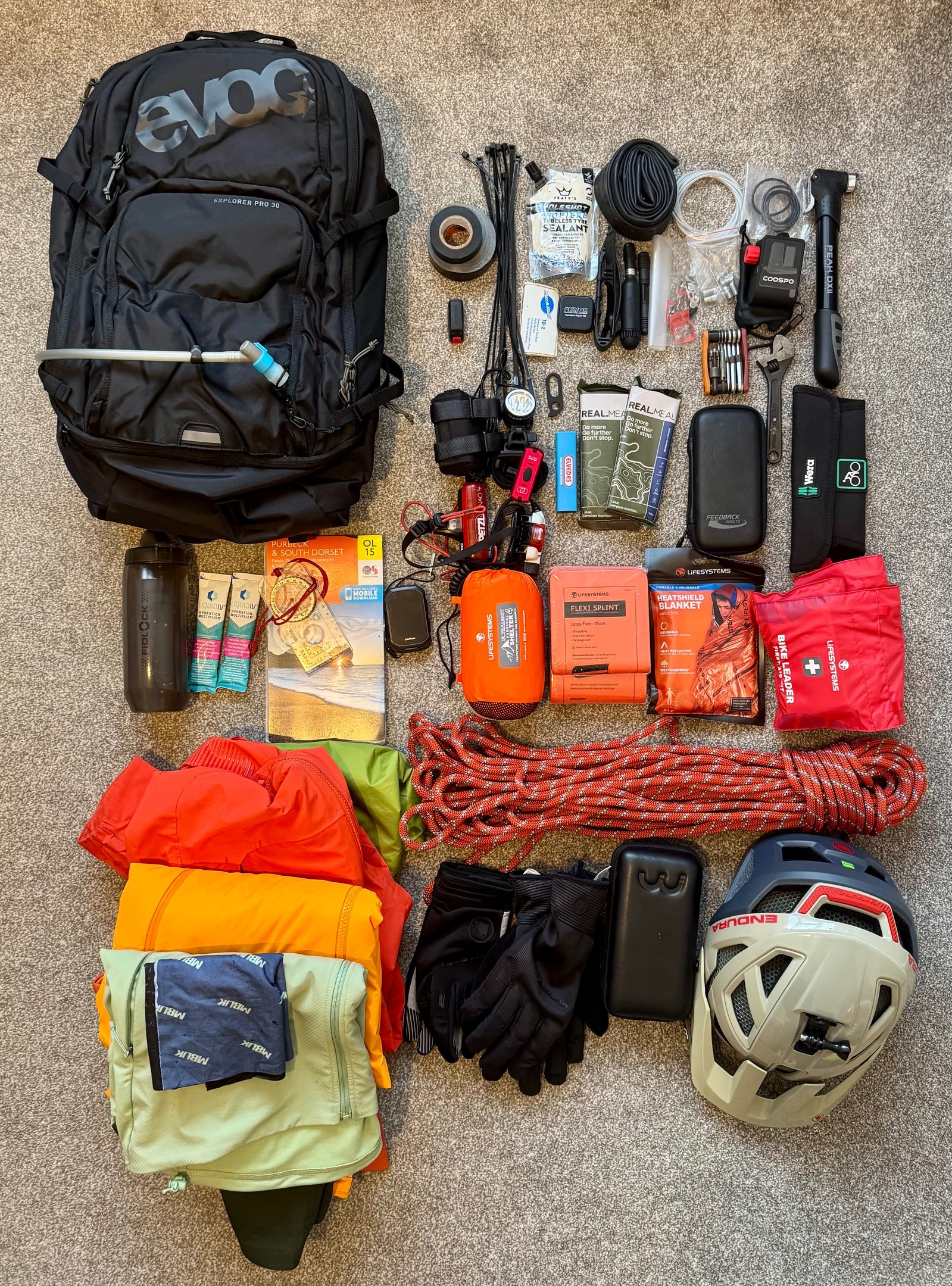
Over the years I’ve refined my setup into a kit that’s capable of dealing with mechanical issues, injuries, sudden weather changes, and unexpected time spent out on the hillside. Everything I pack has earned its place. The flat-lay image above shows my full loadout, and below is a detailed breakdown of why each item comes with me.
Why Carry So Much?
Remote riding isn’t just about fitness or skill — it’s about self-reliance. A broken chain, a derailleur failure, a sudden storm, or a minor crash can quickly turn into a major problem if you’re miles from a road.
The goal isn’t to carry a survival store; it’s to carry enough to keep yourself moving, keep yourself warm, or keep yourself safe until help arrives.
My Full Remote Riding Kit
🔧 Bike Repair Essentials
When your bike is the only way out, keeping it rolling is priority number one.
In my pack:
Tubeless sealant & tyre plugs – for quick puncture fixes.
CO₂ inflator & pump – fast inflation plus a reliable backup.
Spare inner tube – because cuts still happen.
Tyre levers – simple, light, essential.
Multi-tool – covers almost all mid-ride adjustments.
Adjustable spanner – for stubborn or unusual bolts.
Spare chain links & inner cables – a snapped chain is a day-ender without these.
Duct tape & zip ties – temporary fix for nearly anything.
Spoke key – useful after rock strikes or awkward landings.
Small bottle of chain lube – keeps things smooth on long days.
These are the tools that give me the confidence to head deep into the hills, knowing I can handle most common failures on my own.
🩹 Immediate Care & First Aid
Crashes happen — usually when you least expect them. I carry a proper first-aid setup designed for both minor injuries and more serious situations.
My medical/safety kit includes:
Full first-aid kit
Trauma dressings
Flex splint for immobilising injuries
Bandages, plasters & sterile wipes
Emergency heat blanket
Compact whistle
Head torch (because problems often begin when light starts to fade)
This kit isn’t heavy, but it massively increases your ability to stabilise an injury and stay warm and visible.
🥾 Survival & Safety Gear
If I have to stop moving — due to weather, injury, or waiting for help — these items keep things manageable.
Rope – multipurpose: hauling, securing, or helping someone across terrain.
Map & compass – batteries fail; navigation shouldn’t.
Backup power bank – for GPS, phone, and lights.
Knife / multitool – general use and emergency situations.
GPS device – reliable navigation and route recording.
This is the area where many riders go light, but bad situations often stem from simple things like losing the trail or getting stuck after dark.
🥤 Fuel & Hydration
No energy, no progress. It’s that simple.
Hydration bladder for easy drinking while riding
Extra water bottle
Freeze-dried meals / high-calorie food for long days or unplanned overnighters
Mountain environments drain energy fast — having more than you need is never a mistake.
🧥 Clothing & Protection
Weather can change quickly, especially in exposed areas. Staying warm and dry is often the difference between an inconvenience and a dangerous situation.
I pack:
Waterproof jacket
Windproof shell
Insulating mid-layer
Spare gloves
Lightweight trousers/shorts
Hi-vis outer layer
Helmet (obviously)
This layered approach gives me flexibility for cold, rain, wind, or unexpected descents.
🎒 Organisation & Carrying System
All of this fits neatly into my Evoc Explorer Pro 30L, which offers:
Hydration compatibility
Multiple internal pockets
External mounting straps
Plenty of room for tools and layers
A good pack makes carrying gear easier — and keeps it accessible when seconds matter.
Final Thoughts: Prepared, Not Paranoid
Some riders see a big kit list and think it’s overkill. But when I’m miles from the nearest road and something goes wrong, this gear becomes more than just “stuff” — it becomes my safety net.
Being prepared isn’t about expecting disaster. It’s about giving yourself the freedom to ride further, explore more, and enjoy every minute with confidence.
If you ride remotely, I’d encourage you to build your own kit based on your terrain, your weather, and your experience. Start small, add what you use, and keep refining.
Because out there, self-reliance is part of the adventure.
Services
Expert bicycle repairs and event management support.
Outdoor Instructor, Mountain Leader and RockClimbing Instructor.
MIAS MTB, NNAS and Bike Ability Cycle Courses
Contacts
Newsletter / Blog
info@cyclemechanic2u.co.uk
+44 07985709896
© 2025. All rights reserved.